Foreword
I was talking to Elizabeth at a recent party. She told me about her hairdresser who was perplexed on how one could be proficient at tango without having to dump thousands of dollars on lessons. Her hairdresser would also ask what "Costume" she wore when she went tango dancing. I told Elizabeth that she was talking about Ballroom Tango, and the practice of Ballroom schools that charge based on a linear progressive level (Bronze, Silver, Gold) system .
This is not an isolated question that non-dancers would ask. For instance, whenever the TV shows "Dancing With The Stars," and "So You Think You Can Dance" air, my friends would say, "I was thinking about you when they do Tango. Do you also wear those... 'Spandex latin shirts/coat tails/costumes' when you Tango?" I chuckle and politely explain that I dance Argentine Tango–not Ballroom Tango. They respond with a perplexed look, and I try to explain further.
Being a former ballroom dancer, and now, an exclusive practitioner of Argentine Tango, please allow me the opportunity to try to explain the differences between the two.
The following are my redactions from several historical references in my library, on-line, and my own 1st hand experiences.
Origins
ARGENTINE TANGO
The original Tango!
Born in the streets and bordellos of the late 19th and early 20th century Buenos Aires, Argentina. At first, a dance of illicit diversion participated in by the denizens of the night.
It found its way to the dance halls of Europe via Paris' cultural avant-garde. Suddenly, Tango was all the rage. Several evolutions of the dance happened, even the classical colors of tango (black and red–which was originally orange) were concieved and marketed.
Due to the influx of Europeans via travel and immigration to Buenos Aires, Tango returned with a new flavor and fervor. It moved out of the bordellos and slums into mainstream Buenos Aires society. It became "Gentrified." It no longer was the original "Dirty dance." It was now an earthy, beautiful and elegant art form. Further evolutions occurred and the dance took the form that we all know and love today.
To this day, Argentine Tango undergoes constant progressive growth while preserving its intimate, sensual, and elegant roots. This has created some of today's beautiful and popular Argentine Tango styles like Salón, Milonguero, Nuevo, Villa Urquiza, Nuevo, Fantasia (a.k.a. Show Tango), etc.
Argentine Tango performance by the late Carlos Gavito &
Geraldine Rojas
BALLROOM TANGO
Also known as American Tango, American Smooth Tango, American Standard Tango. Originally based on Argentine Tango, it deviated, branched off, and evolved (even the music) into a totally different dance altogether. Ballroom Tango is like the English muffin, and the French Fry. It is an American invention!
America first saw what was supposed to be a Tango in the 1921 silent movie, "Four Horsemen of the Apocalypse." It starred Rudolph Valentino. This movie created a craze for the new dance.
America's first glimpse of "Tango." Rudolph Valentino's 1921 silent movie
(*Note: The soundtrack was added by the Youtube poster)
Unfortunately, due to the prevailing (and extremely prudish) social and moral attitudes of the 1920's and 1930's, Argentine Tango (as it was supposed to be danced), was considered too intimate, too much body contact, scandalous, lascivious, and thus socially unacceptable to be danced in public. Also, the sheer improvisational nature of Argentine Tango made it difficult to build a standardized teaching syllabus around.
Enter Arthur Murray (Yes, the founder of the Arthur Murray franchise chain of dance schools). He took Tango, combined it with touches from different Ballroom dances, "sanitized" the moves, "Anglicized" the terms, standardized the steps and patterns to make it fit into the stratified levels of Bronze, Silver, and Gold, (with separate pricing plans) of his dance schools. His efforts have succeeded in creating what is now known as Ballroom Tango. This method was applied to all dances taught by the chain.
A further evolution of this happened when American Tango crossed the Atlantic to England. The English codified the steps and movements further in order to standardize the judging for competitions. It became known as, International Tango (a.k.a. International Ballroom Tango, International Standard Tango).
American and International (Ballroom) tango are identical in technique. The difference is that American Tango permits open holds, which allow broken hold moves such as underarm turns, side-by-side choreography, etc. International Tango is strictly done in closed hold. Dancers cannot break their 3 points of contact (i.e. hips, left arms, right arms). Doing so will cost point deductions.
A world class Ballroom Tango at Blackpool, England.
The Olympics of Ballroom dancing competion
Technical Differences (That I know of)
*For Brevity: AT=Argentine Tango; BR=Ballroom Tango
Purpose of the dance
AT: Passionate. You dance for the connection. You dance for your partner. Danced socially.
BR: Exuberant. You dance for the appreciation and adulation of the audience/judges. Geared towards showcases and competition.
Music
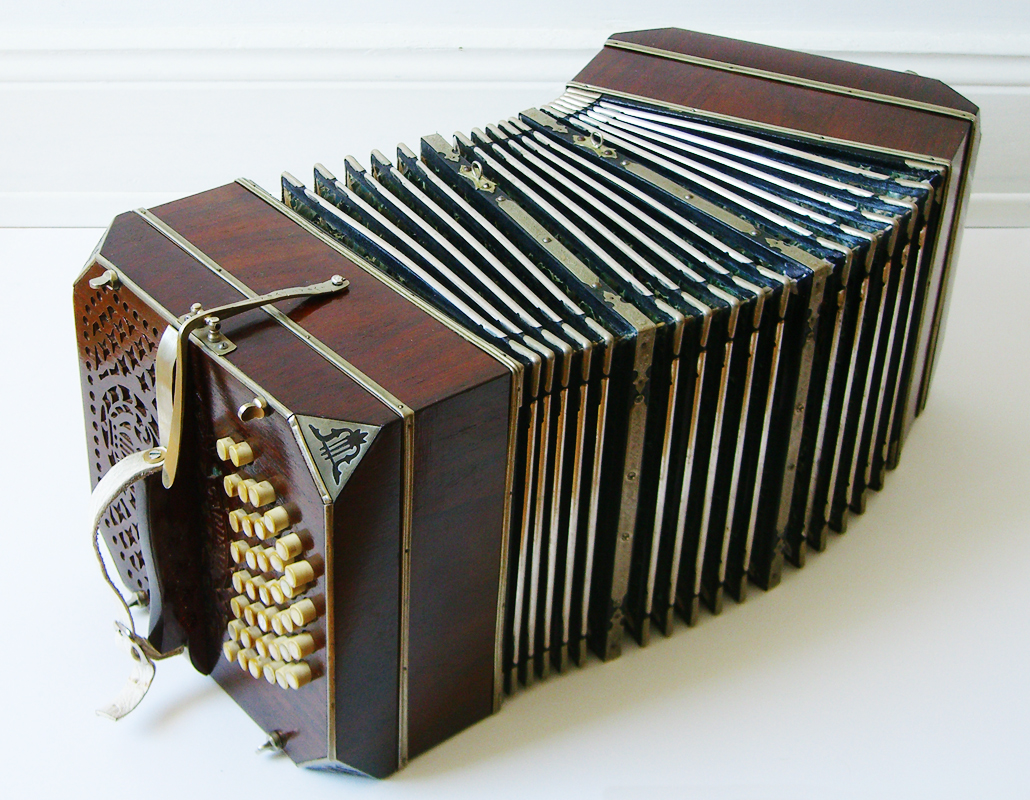
AT: The Bandoneon is the primary instrument. Rhythm can change several times within one song. Danced in sets of 4 songs called a "Tanda." Conspicuous absence of percussion. Dancers dance to the rhythm of the music. (note the Argentine Tango video soundtrack)
BR: Characterized by distinctive staccato marching beat, usually in 2/4 time. Beat is normally via snare drum with a distinctive "dump-dump-dump-dump-da-da-dump-dump-dump-dump" in keeping with the standard 5-count basic step. I uses the rhythm of "slow, slow, quick, quick, slow." The music is arranged to match this pattern. (note the ballroom video soundtrack)
Posture
AT: Men–Weight forward on the balls of the feet, shoulders back, chest out. Women–same.
BR: Men–Weight back square on the heels, shoulders back, chest out. Women–Leaned back, weight on the heels
Dance Position
AT: Dancers commonly use the "Milonguero" stance–an embrace. The contact from chest-to-chest. Looks like the letter "A" when done right.
BR: Dancers use the "Waltz" hold. Contact is side of the hip to side of the hip, legs alternating in between each other. Looks like the letter "Y"
Foot Placement
AT: Toe lead. Toe hits the ground first on the step
BR: Heel lead. Heel hits the ground first, as in a march
Women's Shoes
AT: Tango shoes are stiff to help support the woman's weight as she is normally on the balls of her feet most of the time. This is also the reason why a lot of Tango shoes have stiletto heels. They have hard leather soles as they are better at pivoting, and intended to be worn out AND to go dancing with.
BR: Flexible to allow for better "Pointing." Heels are lower, and wider as the weight lands on the heel often. Their soles are made of suede to protect the floor.
Technique & Steps
AT: Predominantly improvisational. Strides are normally shoulder width. Movements are smooth deliberate and elegant.
BR: Predominantly step/pattern driven. With memorized/standardized cues. Strides are huge. Movements are exaggerated, snappy, aggressive, and have a stalking, staccato character.
Clothes
AT: Evening attire. If you can wear them out on an elegant date, this will work.
BR: Flashy, flamboyant ,Ball gowns, Costumes, feathers, sparkles, bling, make-up, etc.
With that, I hope it helps and clears up a few things.
Showing posts with label dance. Show all posts
Showing posts with label dance. Show all posts
06 January 2009


25 December 2008
4 Stages of Dance. What level are you at?
One part of my occupation is as a training professional. I am always on the lookout for material regarding adult learning theory. I stumbled upon this article. Its a classic learning model, but adopted to dance.This article was originally written with Ballroom dance in mind. However, I find it more poignant to the study of Argentine Tango as our dance is improvisational by it's very nature. This method of learning would be a disciple worth investing in for the aspiring Tango dancer.Credit goes to: - by Dean Paton, on whose site I found the original article: http://www.nwdance.net/4_stages.html. I have made redactions to facilitate better reading in this medium.~Ampster
= = = = = = = = = = = = =
- Dances and 4 Stages of Mastery
- Unconscious Incompetence
- Conscious Incompetence
- Conscious Competence
- Unconscious Competence
1) Unconscious Incompetence
In this stage you have little experience or skill. In fact, you're likely quite bad, but because you don't know how truly bad you are, you don't feel bad, and your self-esteem isn't crippled. Yet.
2) Conscious Incompetence
2) Conscious Incompetence
True damage to self-esteem (and the false confidence that coexists with the bliss of ignorance) often occurs in this second stage of learning - Conscious Incompetence. As your awareness evolves into this stage, you begin to realize how little you know. Perhaps you notice how impossible it seems for you and your partners to do much of anything smoothly. You certainly convince yourself that practically everyone at every dance or class is so talented that you'd never think of dancing with them. You may well flee the dance early, and might even avoid such terrifying places of public exhibition for weeks.A vital step in the learning cycle. For once your exaggerated sense of self-loathing finds an equilibrium, you have the chance for some valuable self-assessment -- you can begin to determine your strengths and weaknesses, and from this sense of where you really are you can begin to focus on strategies for improvement. Much learning occurs here.
As your skills get better and your body works with your mind to integrate new steps and moves into your dancing, you evolve into stage three -- Conscious Competence.
As your skills get better and your body works with your mind to integrate new steps and moves into your dancing, you evolve into stage three -- Conscious Competence.
3) Conscious Competence
This is enjoyable and exciting for most people, because they not only start seeing themselves as good dancers, they realize how much they have learned. Others tell them how enjoyable they are to dance with, now that they've reached a certain competence, so a reborn confidence repairs their self-esteem.
Nevertheless, dancers in the Conscious Competence stage spend much of each dance thinking about what move to execute next, and how to balance the effort required to choreograph the next eight bars with the excitement of connecting with their partner. Brains occasionally go on overload, and feet still get trampled, but in general Conscious Competence is an enjoyable stage. Most people spend considerably more time here than in the first two stages. It is also a plateau where many dancers choose to remain.
4) Unconscious Competence
Nevertheless, dancers in the Conscious Competence stage spend much of each dance thinking about what move to execute next, and how to balance the effort required to choreograph the next eight bars with the excitement of connecting with their partner. Brains occasionally go on overload, and feet still get trampled, but in general Conscious Competence is an enjoyable stage. Most people spend considerably more time here than in the first two stages. It is also a plateau where many dancers choose to remain.
4) Unconscious Competence
True mastery isn't attained until this fourth stage of learning . This is the place where there is little or no difference between what the body has practiced to perfection and the mind has learned. You no longer think about your frame, or what move comes next. In fact, you don't think much (about the moves, at least). Instead, you're free to enjoy the moment and genuinely connect with your partner. Those who manage to reach this level of mastery are sought after, indeed revered on the dance floor.
The trick is in the getting there. Anyone who manages to take most of the classes offered is pretty much guaranteed to reach stage three -- Conscious Competence. After a year or so of Walter, Julie, or any other instructor, drilling you with new steps and old jokes, you'll dance comfortably with most partners and have a good time.
To achieve mastery, however, you may well have to abandon the linear approach -- give up the convenient notion that simply by progressing through a prescribed sequence of classes you'll end up a great dancer. When we think linearly, we tend to think in terms of quantity instead of quality, or we make alienating comparisons: I want to learn more slick moves; I'll only dance with partners at my level; she's better than I am (or I'm better than him). The trap here is that you risk becoming a dance snob, a stylized technician with the moves of Fred or Ginger, but the heart and soul of Schwarzenegger's Terminator.
When you dance with someone who has achieved mastery, you know it within a few seconds. These partners allow you to look and feel grand, not better than you are, but as good as you can be. You connect. You'll dance with them again and again. Such mastery is an art form, a gift they give to each of their partners. You can choose mastery, just as you can choose to stay at stage three. Both options are valid.
If you opt for mastery, however, part of the prescription is to start seeing each Living Traditions class not as a step in a finite sequence but as a timeless opportunity for learning. So what if you've taken Slow Waltz 2 twice, or Foxtrot 2 three times? Go back and take Slow Waltz 1 again. And again and again. Plunge back into Foxtrot 1, or Swing 2, or try role reversal. What you learn will not necessarily be a published part of the curriculum, but as you guide a less experienced dancer toward new confidence and grace, as you forget about your own footwork and simply enjoy moving with your partner to a new level of competence, your own dancing will transport you to a place of uncommon joy, and you will learn far more than you ever learned the first time through. About dancing, and about yourself.
That's the real magic of any dance class. No matter how many times you take it.
The trick is in the getting there. Anyone who manages to take most of the classes offered is pretty much guaranteed to reach stage three -- Conscious Competence. After a year or so of Walter, Julie, or any other instructor, drilling you with new steps and old jokes, you'll dance comfortably with most partners and have a good time.
To achieve mastery, however, you may well have to abandon the linear approach -- give up the convenient notion that simply by progressing through a prescribed sequence of classes you'll end up a great dancer. When we think linearly, we tend to think in terms of quantity instead of quality, or we make alienating comparisons: I want to learn more slick moves; I'll only dance with partners at my level; she's better than I am (or I'm better than him). The trap here is that you risk becoming a dance snob, a stylized technician with the moves of Fred or Ginger, but the heart and soul of Schwarzenegger's Terminator.
When you dance with someone who has achieved mastery, you know it within a few seconds. These partners allow you to look and feel grand, not better than you are, but as good as you can be. You connect. You'll dance with them again and again. Such mastery is an art form, a gift they give to each of their partners. You can choose mastery, just as you can choose to stay at stage three. Both options are valid.
If you opt for mastery, however, part of the prescription is to start seeing each Living Traditions class not as a step in a finite sequence but as a timeless opportunity for learning. So what if you've taken Slow Waltz 2 twice, or Foxtrot 2 three times? Go back and take Slow Waltz 1 again. And again and again. Plunge back into Foxtrot 1, or Swing 2, or try role reversal. What you learn will not necessarily be a published part of the curriculum, but as you guide a less experienced dancer toward new confidence and grace, as you forget about your own footwork and simply enjoy moving with your partner to a new level of competence, your own dancing will transport you to a place of uncommon joy, and you will learn far more than you ever learned the first time through. About dancing, and about yourself.
That's the real magic of any dance class. No matter how many times you take it.
16 July 2008
What Argentine Tango Leaders should know...
Here is my attempt at a synopsis for the benefit of the leaders, both seasoned and new:
FRAME POSTURE AND POSITION
- The arms are for the embrace NOT for leading
- The arms are there to hold the connection comfortably, and not to be used steer your partner like a boat rudder
- Granted every now and then you can use the arms for sending lead impulses. But that's an exception
- Maintain your Tango posture
- Stand straight, weight forward, relax, chest out, don't cave your chest, don't nuzzle
- Lead from your chest
- Use your chest, core, center, frame
- Use them to direct and guide the motion of your partner
- Leading movements in AT is an excercize in improvisation, NOT memorization
- Get the lessons you have learned and string them together to form your interpretatation of the song
- Don't rely on fixed patterns
- They are boring
- If your leading a movement, and it doesn't work, move on. DON't teach!
- A common newbie mistake
- Don't impress her with your fancy steps. Impress her with your simplicity
- Keep it simple, feel the music, out of simplicity, beauty comes
- Listen to the music. Develop your rhythmic skill
- Dance in-tune with the music. It makes such a difference in your leading
- Maintain your lane
- Counterclockwise please, and maitain your lane. Don't drift
- Dance in the appropriate size
- If you have the space, go ahead and do your showy stuff. Dance big
- If its a packed house, dance small, dance close to the floor and avoid the flailing leg things and the huge strides
- Be aware of where you're at at all times
- You are blind-sided on the right, do half turns, giros so you can see around you
- Adjust your position to those around you
- Don't back into traffic
- Inconsiderate and dangerous
- Don't stop traffic
- Inconsiderate
- If you must do your slow, stationary, and showy moves, move to the center
- The outside lanes are for moving traffic and for more experienced dancers
- The inside lanes are slower and offer more spcae for experimentation
- If you are just getting into AT, use the inner lanes
- If AT is new to you stay in the inner lanes. They are slower and much more forgiving
- If you bump into someone, make eye contact and apologize-EVEN IF YOU ARE NOT the instigator
- Gentlemanly behaviour makes for a good milonga. You will know who is at fault
- Maintain good personal hygiene
- You will be dancing close. VERY close. You must not stink!
- AT music is varied, familiarize yourself, and adapt your dancing to the music
- Depending who the composer is, AT music can have consistent rhythm, to changing rhythm several times in the same song
- This is one element in AT that is quite difficult to get the hang of. BE PATIENT in learning to "hear" the music
- Maintaining and dancing connected to one's partner at an etheriel level is the point of AT. NOT dancing steps and patterns
- You'll know once it happens
- Lots of endorphins
- Dance for your partner. NOT for the audience
- If you want to show off stay in the center of the floor
- When you dance, no one else matters except your partner
- AT is a 3 minute date
- Don't analyze it, Dance it
- When you are on the floor dance for the sake of the enjoyment of you and your partner
- Don't overanalyze things. It shows in your dance and mess you up
- Let things flow as they will
- Things will never be perfect, so let it go and flow
- AT is a conversation between two bodies without words
- Your partner chose to accept your invitation and dance with you. Return the courtesy and respect her
- Your partner is there to complete the AT equation
- No matter how good you think you are, you are nothing without a partner
- Adapt to your partner's level
- Don't force your "advanced" skills on your partner
- A talented leader will be able to dance with any partner at any level of skill, and the dance will look good
Subscribe to:
Posts (Atom)