Showing posts with label ballroom. Show all posts

08 April 2009

The intricacy of simplicity

In my post entitled, "Meanderings through tango music," I talked about my transition of musical preferences from nuevo style tango music to traditional tango renditions. Along with that change in taste in music, came a change in my dance style. The evolution of my tango style went from preferring dancing in open embrace to eventually concentrating on the close embrace exclusively.


This is a narrative of that journey...


The first lessons...
Coming from a ballroom background, I was comfortable with a tango open embrace. A ballroom close embrace is an open embrace in tango. That was an easy enough adaptation. Overlay that with the 8-count basic, and step variations, I thought I was golden. Little did I know that this was just my (Sony Newman) teacher's way of easing students in.

It got complicated really fast. Along with the steps, my teacher incorporated basic balancing and walking exercises that were in reality, exercises in technique —I ignored them thinking that they were only there to occupy time. He was a perfectionist. At 75 (at the time) , he was quite feisty. His lessons frustrated me and made my brain ache.

I eventually caught up with the learning curve and became proficient in open embrace tango (so I thought). I could do fancy stuff like leading over-extended front ochos, boleos, sacadas, calecitas, et cetera, et cetera, et cetera.

I had a large répertoire of steps. I was ready to go to a milonga!


The first milongas...
Like many an arrogant newbie before me, I made a very painful and humbling self-discovery... A good student in tango class, does not a good tango dancer make. I knew all the steps, but I had the wrong frame of mind. I had the show dancer mentality. I was dancing for the adulation of the audience.

Up until then, I never really appreciated the music. I needed percussion, so I looked for nuevo music. That being said, the result was that I danced out of tune—My musicality sucked. Knowing this, I tried to get better, and struggled through the frustration and ill-perceived embarrassment. This was turning into a serious trampling to one's ego. In any case, I still loved it so much that I kept going.

I got incrementally better. I got smoother and smarter. I got more coordinated and less klutzy. Things were starting to come along. I was comfortable.

One night, my wife and I decided to investigate a different milonga and a funny thing happened that night. I asked a lady to dance and she was gracious enough to oblige me. Much to my surprise, her arm went all the way around my shoulder... Oh my! *GASP* I was enveloped in a close embrace!

I didn't know what to do and tried to control my panic and keep my composure. I couldn't move and my "stuff" was not going to work—No space. I walked the tanda and my poor partner suffered through my gawkiness.

So much for being ready. I sat out the night and watched. It turns out that the tango place we went to was a predominantly milonguero place. I saw dancers like these on my tango videos... The people I fast forwarded through because I thought they were boring.

My perspectives had suddenly and abruptly changed. I was terrified, but found it nice at the same time.


A new outlook about the tango embrace...
I told my teacher about my close embrace experience–He chuckled and explained that now, I was ready to try close embrace. I asked why he didn't teach that in the first place?

He wanted his students to experience the whole gamut of tango. His theory was that if one can dance in the open, then, one can dance in close. Simply reduce the size of what was taught, to an eighth of what it was. The tricky part is to now lead with only one's core and nothing more. He continues that once one is able to find the right mix of comfort level + expertise, one gravitates to only a few basic steps to do really, really well and just revisit the rest when the right partner comes along.

According to him, when I get to this point, is about the time I would realize that I don't need to take classes from him anymore. He smiled. He was right. I took it to heart, and eventually became acceptably competent tango dancer.


A very visceral connection...
The main difference between dancing open and close embrace was the level of connection. Dancing in the open was fun, fancy, and vigorous. Dancing in close embrace was intimate, internal, and a very visceral experience.

IMHE, when I was dancing in the open, I was concentrating on cool moves and leading them well. I was, a bit self absorbed, and I did it (really) to look good.

When I concentrated on dancing in close embrace, a different kind of magic happens. I am now dancing FOR my partner. She is the only one that matters during the tanda, I dance for her. It's all about her.

This was the one feeling I found to be so delightful. I knew I was doing a good thing because every now and then, I made someone truly happy, even for but a fleeting moment of a tanda. Every now and then, I could make the magic work.


Looks can be deceiving...
When I began tango a few years ago, I contrasted the two dichotomies. I reveled at the cool nuevo generation of tangueros. I thought the stuff that they did was marvelous. On the other hand, I glazed over the viejo. I thought they were slow, boring, and geriatric. What they did looked boring because they were just walking. "Anyone can do that," I said to myself.

When I experienced and learned close embrace, I realized that my previous opinion was so wrong. It is actually harder (for me) to dance close embrace because it is internal. It's all about the way it felt and not the way it looked. It requires more concentration. It requires more tuning into your partner. Leading used subtle muscular impulses, and used the whole body to transmit your lead messages to one's partner, almost like dance osmosis. Bizarre, beautiful.

The old cliché "looks can be deceiving," applies. When one dances in close embrace, there is so much going on between the partners. Only the acutely trained can see this interaction. It is in essence, a private conversation expressed in dance, using the tango dialect.

All of these complexities and nuances interact to produce an art form so intricate, yet so beautifully simple.

25 March 2009

My meanderings through tango music

My appreciation for tango music went through a long evolutionary process. My first preference was nuevo style music. Fast forward few years to where I am now, I listen to none but traditional tango music. Here's how that metamorphosis went...


In the beginning...
My wife and I were at one time, avid ballroom dancers and were poised to enter the competitive ballroom scene. As fate would have it, we did not bow to that madness (that's another story). We discovered tango and it became our specialty. We didn't know (at the time) that there were different types of tango! In any case, we (finally) discovered Argentine Tango and never looked back.


My view of tango music was shaped by American Ballroom Tango. The premise—In order for one to dance well, one needs to follow the beat. In ballroom tango, the musical arrangements are written to pound this into a distinctive 4/4 time march-like cadence.


Ballroom tango music


First exposure to "real" Argentine tango music...
Crossing over from ballroom, my only "real" knowledge of tango music came from the (2004) movie "Shall we dance," a remake of the original 1996 Japanese movie of the same title.
My first idea of "real" tango music (Gotan Project)

My brain was filled with a load of assumptions and presumptions on how this dance should be. I was under the misguided belief of transposing my previous dance experience and apply it to tango. I thought that this was the fastest way to be good at tango. It was (in hind sight) quite arrogant of me.

I was looking for music that had a constant, discernible, and structured beat. I was looking for music like salsa, or cha-cha. I assumed that, since Argentina was in latin America, ergo, it should be like any other latin rhythm—right? I wanted music that when you just listened to the beat, you knew what it was, and you knew what step to pick and use. Music that didn't change rhythm... just like ballroom, salsa, and cha-cha.


First frenzy...
I discovered Gotan project. Hey, it's tango music. Good enough to be in a movie I liked, its good enough for me. I get this kind of music. Good beat, modern, sleek, cool. I spent time collecting music from Otros Aires, Narcotango, Gotan Project, Bajofondo Tango Club... All the "cool" stuff. I started collecting CITA DVD's. Gotta watch the nuevo masters. I liked the moves. I was impressed and wanted to do them... Just like ballroom. It was all about the flashy-cool moves.

At this point in time, I DID NOT KNOW HOW TO DANCE Argentine tango, yet. I just thought I could do anything. I was still in "research" mode, and basing my assumptions on what I knew.


Beginning tango lessons, a rude awakening...
I enrolled with my first real Argentine tango teacher. He was very good (as a first teacher). He was very strict. He showed my technical inadequacies in no uncertain terms. The music he used used to teach his class... Old scratchy pre-World War II sounding stuff. I couldn't stand it! Why, oh why did this old man insist on his old music? Nostalgia? Ugh!

It was bad enough that my brain ached after the class trying to learn this tango thing. It didn't help that my ego got trampled every single time. All of this while the horrible old scratchy music grated at me constantly. I didn't get this music. Why didn't they use a drum? Why did it change rhythm and tempo several times in one song. It was confusing to me. I couldn't read it. Oh, did I mention it was scratchy?


A funny thing happened. I learned how to dance tango...
I had to unlearn everything I knew. I started re-learning with an open mind. Working through my frustrations, I patiently persisted. After about a year or so, my teacher told me that in the end, despite all the steps that he taught, I had to make the dance, my own. Take what he taught, string them together and make it into something distinctly mine. He said, "When you can make it flow WITH A PARTNER, regardless of how good or bad she is and make it an experience, then you know you can tango."


This resounded in my brain like a cathedral bell. The connection, the syncopated motion combined in a magical way. Suddenly, the intricacy of the old, traditional music became meaningful. I got it—I GOT IT!


The nuevo style stuff was now BORING! It did not have the character of the traditional music. It might as well be salsa or cha-cha. If you sat there and just listened, a whole evening would go by and there would be one steady cadence... It limited my musicality to the song, because I found that you were tied to a consistent rhythm.


With the traditional music, you danced to the down beat of the melody. I slowed when it slowed, I sped up when it sped up. Hesitations and pauses became intrinsic parts of my dance. I danced with the music and not to the music. It has become a zen-like experience with a partner. It's always a new experience—every time.


And so, for the last few years, my iPod and my music listening has since been dominated by traditional tango music. Of course, I still listen to nuevo stuff... But I don't dance to it anymore.


Juan D' Arienzo


06 January 2009

A layman's guide to the different types of Tango

Foreword
I was talking to Elizabeth at a recent party. She told me about her hairdresser who was perplexed on how one could be proficient at tango without having to dump thousands of dollars on lessons. Her hairdresser would also ask what "Costume" she wore when she went tango dancing. I told Elizabeth that she was talking about Ballroom Tango, and the practice of Ballroom schools that charge based on a linear progressive level (Bronze, Silver, Gold) system .

This is not an isolated question that non-dancers would ask. For instance, whenever the TV shows "Dancing With The Stars," and "So You Think You Can Dance" air, my friends would say, "I was thinking about you when they do Tango. Do you also wear those... 'Spandex latin shirts/coat tails/costumes' when you Tango?" I chuckle and politely explain that I dance Argentine Tango–not Ballroom Tango. They respond with a perplexed look, and I try to explain further.

Being a former ballroom dancer, and now, an exclusive practitioner of Argentine Tango, please allow me the opportunity to try to explain the differences between the two.

The following are my redactions from several historical references in my library, on-line, and my own 1st hand experiences.


Origins

ARGENTINE TANGO
The original Tango!
Born in the streets and bordellos of the late 19th and early 20th century Buenos Aires, Argentina. At first, a dance of illicit diversion participated in by the denizens of the night.

It found its way to the dance halls of Europe via Paris' cultural avant-garde. Suddenly, Tango was all the rage. Several evolutions of the dance happened, even the classical colors of tango (black and red–which was originally orange) were concieved and marketed.

Due to the influx of Europeans via travel and immigration to Buenos Aires, Tango returned with a new flavor and fervor. It moved out of the bordellos and slums into mainstream Buenos Aires society. It became "Gentrified." It no longer was the original "Dirty dance." It was now an earthy, beautiful and elegant art form. Further evolutions occurred and the dance took the form that we all know and love today.

To this day, Argentine Tango undergoes constant progressive growth while preserving its intimate, sensual, and elegant roots. This has created some of today's beautiful and popular Argentine Tango styles like Salón, Milonguero, Nuevo, Villa Urquiza, Nuevo, Fantasia (a.k.a. Show Tango), etc.

Argentine Tango performance by the late Carlos Gavito &
Geraldine Rojas


BALLROOM TANGO
Also known as American Tango, American Smooth Tango, American Standard Tango. Originally based on Argentine Tango, it deviated, branched off, and evolved (even the music) into a totally different dance altogether. Ballroom Tango is like the English muffin, and the French Fry. It is an American invention!

America first saw what was supposed to be a Tango in the 1921 silent movie, "Four Horsemen of the Apocalypse." It starred Rudolph Valentino. This movie created a craze for the new dance.

America's first glimpse of "Tango." Rudolph Valentino's 1921 silent movie
(*Note: The soundtrack was added by the Youtube poster)


Unfortunately, due to the prevailing (and extremely prudish) social and moral attitudes of the 1920's and 1930's, Argentine Tango (as it was supposed to be danced), was considered too intimate, too much body contact, scandalous, lascivious, and thus socially unacceptable to be danced in public. Also, the sheer improvisational nature of Argentine Tango made it difficult to build a standardized teaching syllabus around.

Enter Arthur Murray (Yes, the founder of the Arthur Murray franchise chain of dance schools). He took Tango, combined it with touches from different Ballroom dances, "sanitized" the moves, "Anglicized" the terms, standardized the steps and patterns to make it fit into the stratified levels of Bronze, Silver, and Gold, (with separate pricing plans) of his dance schools. His efforts have succeeded in creating what is now known as Ballroom Tango. This method was applied to all dances taught by the chain.

A further evolution of this happened when American Tango crossed the Atlantic to England. The English codified the steps and movements further in order to standardize the judging for competitions. It became known as, International Tango (a.k.a. International Ballroom Tango, International Standard Tango).

American and International (Ballroom) tango are identical in technique. The difference is that American Tango permits open holds, which allow broken hold moves such as underarm turns, side-by-side choreography, etc. International Tango is strictly done in closed hold. Dancers cannot break their 3 points of contact (i.e. hips, left arms, right arms). Doing so will cost point deductions.

A world class Ballroom Tango at Blackpool, England.
The Olympics of Ballroom dancing competion


Technical Differences (That I know of)

*For Brevity: AT=Argentine Tango; BR=Ballroom Tango

Purpose of the dance
AT: Passionate. You dance for the connection. You dance for your partner. Danced socially.
BR: Exuberant. You dance for the appreciation and adulation of the audience/judges. Geared towards showcases and competition.

Music
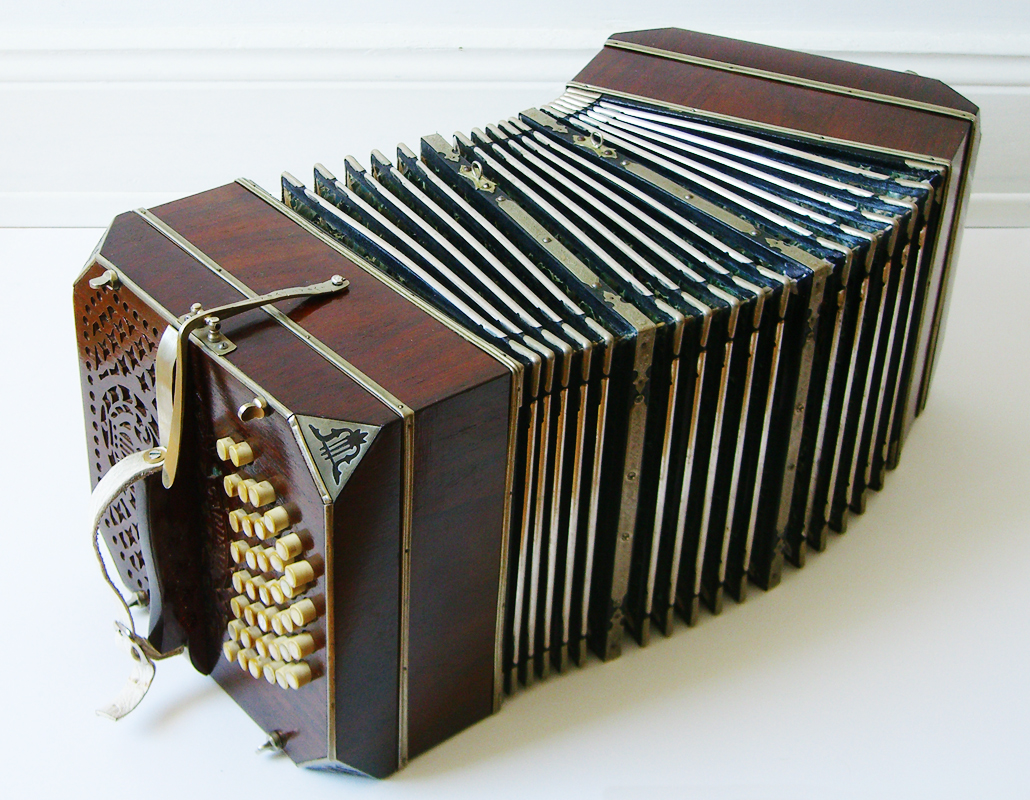
AT: The Bandoneon is the primary instrument. Rhythm can change several times within one song. Danced in sets of 4 songs called a "Tanda." Conspicuous absence of percussion. Dancers dance to the rhythm of the music. (note the Argentine Tango video soundtrack)
BR: Characterized by distinctive staccato marching beat, usually in 2/4 time. Beat is normally via snare drum with a distinctive "dump-dump-dump-dump-da-da-dump-dump-dump-dump" in keeping with the standard 5-count basic step. I uses the rhythm of "slow, slow, quick, quick, slow." The music is arranged to match this pattern. (note the ballroom video soundtrack)

Posture
AT: Men–Weight forward on the balls of the feet, shoulders back, chest out. Women–same.
BR: Men–Weight back square on the heels, shoulders back, chest out. Women–Leaned back, weight on the heels

Dance Position
AT: Dancers commonly use the "Milonguero" stance–an embrace. The contact from chest-to-chest. Looks like the letter "A" when done right.
BR: Dancers use the "Waltz" hold. Contact is side of the hip to side of the hip, legs alternating in between each other. Looks like the letter "Y"

Foot Placement
AT: Toe lead. Toe hits the ground first on the step
BR: Heel lead. Heel hits the ground first, as in a march

Women's Shoes
AT: Tango shoes are stiff to help support the woman's weight as she is normally on the balls of her feet most of the time. This is also the reason why a lot of Tango shoes have stiletto heels. They have hard leather soles as they are better at pivoting, and intended to be worn out AND to go dancing with.
BR: Flexible to allow for better "Pointing." Heels are lower, and wider as the weight lands on the heel often. Their soles are made of suede to protect the floor.

Technique & Steps
AT: Predominantly improvisational. Strides are normally shoulder width. Movements are smooth deliberate and elegant.
BR: Predominantly step/pattern driven. With memorized/standardized cues. Strides are huge. Movements are exaggerated, snappy, aggressive, and have a stalking, staccato character.

Clothes
AT: Evening attire. If you can wear them out on an elegant date, this will work.
BR: Flashy, flamboyant ,Ball gowns, Costumes, feathers, sparkles, bling, make-up, etc.

With that, I hope it helps and clears up a few things.

16 July 2008

What Argentine Tango Leaders should know...

Here is my attempt at a synopsis for the benefit of the leaders, both seasoned and new:


FRAME POSTURE AND POSITION

  • The arms are for the embrace NOT for leading
  • The arms are there to hold the connection comfortably, and not to be used steer your partner like a boat rudder
  • Granted every now and then you can use the arms for sending lead impulses. But that's an exception
  • Maintain your Tango posture
  • Stand straight, weight forward, relax, chest out, don't cave your chest, don't nuzzle
  • Lead from your chest
  • Use your chest, core, center, frame
  • Use them to direct and guide the motion of your partner
IMPROVISATION & DELIVERY
  • Leading movements in AT is an excercize in improvisation, NOT memorization
  • Get the lessons you have learned and string them together to form your interpretatation of the song
  • Don't rely on fixed patterns
  • They are boring
  • If your leading a movement, and it doesn't work, move on. DON't teach!
  • A common newbie mistake
  • Don't impress her with your fancy steps. Impress her with your simplicity
  • Keep it simple, feel the music, out of simplicity, beauty comes
  • Listen to the music. Develop your rhythmic skill
  • Dance in-tune with the music. It makes such a difference in your leading
MILONGA ETIQUETTE
  • Maintain your lane
  • Counterclockwise please, and maitain your lane. Don't drift
  • Dance in the appropriate size
  • If you have the space, go ahead and do your showy stuff. Dance big
  • If its a packed house, dance small, dance close to the floor and avoid the flailing leg things and the huge strides
  • Be aware of where you're at at all times
  • You are blind-sided on the right, do half turns, giros so you can see around you
  • Adjust your position to those around you
  • Don't back into traffic
  • Inconsiderate and dangerous
  • Don't stop traffic
  • Inconsiderate
  • If you must do your slow, stationary, and showy moves, move to the center
  • The outside lanes are for moving traffic and for more experienced dancers
  • The inside lanes are slower and offer more spcae for experimentation
  • If you are just getting into AT, use the inner lanes
  • If AT is new to you stay in the inner lanes. They are slower and much more forgiving
  • If you bump into someone, make eye contact and apologize-EVEN IF YOU ARE NOT the instigator
  • Gentlemanly behaviour makes for a good milonga. You will know who is at fault
  • Maintain good personal hygiene
  • You will be dancing close. VERY close. You must not stink!
MUSICALITY
  • AT music is varied, familiarize yourself, and adapt your dancing to the music
  • Depending who the composer is, AT music can have consistent rhythm, to changing rhythm several times in the same song
  • This is one element in AT that is quite difficult to get the hang of. BE PATIENT in learning to "hear" the music
CONNECTION
  • Maintaining and dancing connected to one's partner at an etheriel level is the point of AT. NOT dancing steps and patterns
  • You'll know once it happens
  • Lots of endorphins
  • Dance for your partner. NOT for the audience
  • If you want to show off stay in the center of the floor
  • When you dance, no one else matters except your partner
  • AT is a 3 minute date
  • Don't analyze it, Dance it
  • When you are on the floor dance for the sake of the enjoyment of you and your partner
  • Don't overanalyze things. It shows in your dance and mess you up
  • Let things flow as they will
  • Things will never be perfect, so let it go and flow
  • AT is a conversation between two bodies without words
YOUR PARTNER
  • Your partner chose to accept your invitation and dance with you. Return the courtesy and respect her
  • Your partner is there to complete the AT equation
  • No matter how good you think you are, you are nothing without a partner
  • Adapt to your partner's level
  • Don't force your "advanced" skills on your partner
  • A talented leader will be able to dance with any partner at any level of skill, and the dance will look good
I'm sure I missed a lot more, but these are the things that jump out immediately based on our discussion and observations at a milonga.