One of the biggest turning points in my tango was the day I learned to listen to my partner. It made all the difference from just dancing to turning each tanda into an beautiful experience.
Concentrating on technical stuff
In the first year of my tango journey, I was obsessed with technical perfection. How to stand, where to put my arm, when to step, how far the stride should be, toe lead, etcetera, etcetera, etcetera...
Despite my pursuit of mechanical proficiency, my tandas with my partners felt cold, uneventful, and devoid of emotion. This, despite the fact I knew my execution was correct. It was just not happening. When I try to lead something, my partner doesn't pick up on it. When I try to move, her reactions were delayed, or off.
"What was I doing wrong?" I asked myself. I sat down and postulated that if in fact what I was doing was (technically) correct, it was the transmission of what I wanted her to do was lacking.
Observation and teachers
On my quest to find out the "Why's and How's" of my conundrum, I did two things. I took classes from good teachers and I watched those on the floor whom I considered "Good."
One common thing emerged from both of them. Patience. Nothing was rushed nor forced. I asked myself, what did any of that matter?
Listening, really listening
Many milongas passed and my experimentation continued. I had problems with the patience thing. I didn't get it. Undaunted, I kept trying. I had to. The coldness of the dance still prevailed.
One particularly lovely tanda, it came to me. I GOT IT!!!
The patience thing DID matter. It offered me an opportunity to listen to my partner. I could read her, I could gauge her actions and reactions. By listening to her, I KNEW her. Knowing this, I knew how I could communicate to her.
Giving, receiving, giving... It's working
By giving her my patience, she gave me the answers I needed. This then allowed me to give to her in ways she could follow. My tango was now a two way street.
It was no longer "I'm leading and you follow." It was more like, I led a proposition, she told me her acceptance and to what degree, and it flowed from there.
For the first time, I could see that my partner had fun dancing with me. For the first time, I felt warmth. For the first time. I felt "That Tango Connection."
That was the day I learned to listen. It was that day when tango became a beautiful experience.
27 March 2010


21 March 2010
We made our tango ours
So here I am, rendered temporarily miserable and tango incapacitated by arthritis (temporarily broken again). Sitting here, wanting to dance... but can't, has caused me to play movies in my head about tango lessons learned from the passed. I am driven you expound on one particular lesson—Making your tango "Yours."
"...but you dance nothing like him!"
One of the (more experienced) tango people in Seattle danced with Mrs. Ampster a while back. In between songs and tandas, he asked from whom she learned to tango. Her answer "Sonny Newman." He then asked, where did I learn to dance tango. She said, "Sonny Newman."
Surprised, he commented that "You (Mrs. Ampster) dance nothing like him (Ampster)." And, "Neither of you look nothing like Sonny!" Mrs. Ampster told me that exchanged, and we both chuckled.
We thought that to be a compliment. Soon a fter we first started learning tango, he said that "You need to make your dance your own." Back then, it was mysterious and cryptic and the comment flew completely over our heads.
Knowing what we know now...
Back then, we simply lacked the experience (at the time) to understand what the lesson meant. Knowing what we know now, Mrs. Ampster and I pick up subtle nuances as we watch the floor. We can see clearly the differences between those with a "Unique tango identity," and the "Tango embodiments."
"...but you dance nothing like him!"
One of the (more experienced) tango people in Seattle danced with Mrs. Ampster a while back. In between songs and tandas, he asked from whom she learned to tango. Her answer "Sonny Newman." He then asked, where did I learn to dance tango. She said, "Sonny Newman."
Surprised, he commented that "You (Mrs. Ampster) dance nothing like him (Ampster)." And, "Neither of you look nothing like Sonny!" Mrs. Ampster told me that exchanged, and we both chuckled.
We thought that to be a compliment. Soon a fter we first started learning tango, he said that "You need to make your dance your own." Back then, it was mysterious and cryptic and the comment flew completely over our heads.
Knowing what we know now...
Back then, we simply lacked the experience (at the time) to understand what the lesson meant. Knowing what we know now, Mrs. Ampster and I pick up subtle nuances as we watch the floor. We can see clearly the differences between those with a "Unique tango identity," and the "Tango embodiments."
- Tango embodiments
- They dance beautifully. Their tango becomes the embodiment of their teachers and tango heroes.
- Unique Tango Identity
- These are the people who have evolved their tango into something all their own. Not necessarily showy, nor flashy.
Bizarre evolutionary paths...
I don't quite know how we got to where we did. Mrs. Ampster and I attended only a hand full of teachers over the years. Of all the lessons we took, we only remembered a few things. Despite the advanced things we learned and our attempts to emulate our teachers—who all had something good to share, we always reverted to basic techniques. It was fun, frustrating, confusing, aggravating and strange.
Somewhere during that evolutionary process, we developed a tango identity unique to each one of us. In the end, it worked for us. It (also) seems to work well with those who dance with... at least most of the time. That was the rewarding part of this journey.
03 March 2010
R E J E C T I O N ! ! !
Rejection: re-jec-tion [ri-jek-sh uh n]
Every time I did get turned down, I would take it personally. I would stew, and dwell over the rejection. I would wonder what I did to merit a rejection. Sometimes, it made me embittered. Sometimes, it made me want to quit tango altogether.
In hindsight, none of what I thought (at the time) ever helped improve my tango. These emotional childish knee-jerk reactions caused mental blocks to learning. Of course it hurt, but then again, it made me think. I needed to find out more and get to the roots (causes) of rejections.
-noun
- the act or process of rejecting
- the state of being rejected
- something that is rejected
Synonyms: brush-off, cold shoulder, dismissal, nix, no dice, no go, nothing doing, no way, pass, rebuff, renunciation, repudiation, slap in the face, thumbs down, turn-down, veto
Context-Milonga: He was rejected by the lady when he asked her to dance a tanda.
= = = = = = = =
This was such a devastatingly brutal word when directed my way (Tango-wise): REJECTION!
That word pounds in my brain. It gnaws at my consciousness. It hits my ego like a hammer blow. It is a foot stomping to my soul. It makes me hang my head in shame. It makes me feel like a loser. It makes me want to hide... Well, at least, this was what I though in milonga times past. I've (think) grown up since then. It hurts.
That word pounds in my brain. It gnaws at my consciousness. It hits my ego like a hammer blow. It is a foot stomping to my soul. It makes me hang my head in shame. It makes me feel like a loser. It makes me want to hide... Well, at least, this was what I though in milonga times past. I've (think) grown up since then. It hurts.
Many have talked about how to say "No" to someone asking for a dance either directly or via cabeceo. A myriad of ways exist to turn down a request to dance a tanda. This is my take on how it felt like to be on the receiving end—Before, and Now
- When I was still a newbie...
Every time I did get turned down, I would take it personally. I would stew, and dwell over the rejection. I would wonder what I did to merit a rejection. Sometimes, it made me embittered. Sometimes, it made me want to quit tango altogether.
In hindsight, none of what I thought (at the time) ever helped improve my tango. These emotional childish knee-jerk reactions caused mental blocks to learning. Of course it hurt, but then again, it made me think. I needed to find out more and get to the roots (causes) of rejections.
- Interviews with lady friends (the followers' side)
- Legitimate things that lead to rejection
- How attractive was the leader's dancing? Bad dancing/leading shows. Women don't want to be a victim
- How smooth was the leader's dancing? A rough dancer/leader is obvious. Women do not want to be a rag doll being thrown around
- Does the leader stink (Breath, BO, Un-fresh clothes)? News like that spreads fast! Women do not want to suffer through any form of B.O.
- How's the leader's demeanor? Leaders who act and look bizarre, strange, scary, rude, arrogant, creepy will scare women away—Anywhere!
- They're tired, in pain, and/or taking a break. Much as they would like to keep dancing, women do get tired. Dancing in heels hurts after a while too.
- No chemistry. It's a fact some personalities just don't mix. There's no attraction. It would not be an enjoyable dance. Nothing personal
- Chatters, Talkers, Singers. Women are there to dance tango—Nothing else.
- Wanna-be Teachers. Very obvious as you can see them teach on the milonga floor. Women want to dance, not to be lectured.
- Aggressive, stroking, sneaky stalkers. Some people are very aggressive and/or uncouth in their approaches that it sometimes startles and scares the intended recipient.
- Dangerous dancers. Some people lead complex and dangerous moves on the floor. Women notice this and some have told me that they would rather be safe and simple than be put in awkward, sometimes dangerous situations.
My friends shared their experiences. They ranged from the funny, absurd, strange, painful, weird, creepy. What was consistent were the aforementioned reasons. They are, legitimate.
- Now that I'm a little bit smarter...
Now that I'm a little bit smarter (so I hope), I remember (vividly) the conversation I had with my friends. I take those lessons from their experiences and temper my reactions to their rejections. Yes, I DO get rejected several times.
The difference now is that, I don't take it personally. Their rejections I take as legitimate, and move on. Nothing personal, and no big deal. It happens all the time. I make it a point not to make the mistakes that were outlined. I valued them as priceless "Lessons learned."
16 February 2010
A cacohpony of twitches. A symphony of impulses
I was once a very "Noisy" dancer. I didn't hum, nor sing, nor talk while dancing. By noisy, I meant that my leading had a lot of frivolous motion that just succeeded in confusing my partner. It made for an unpleasant experience for both of us... And, it didn't look good.
A cacophony of twitches
In my first couple of years of tango, just learning how to lead was such a complicated thing. There was so much going on that I was so wrapped up in the whole experience. I kept at it, thinking that I was making progress.
One day, Mr. Ampster was honest enough to point out my affliction—Noisy dancing. We took a video of ourselves, and of each other dancing with other partners as a means of diagnosis.
Much to my chagrin, I saw what she meant. My shoulders bounced and rolled with the beat. My left arm tried to steer my partner's right arm like a boat rudder. My right arm hooked my partner by the arm pit, trying to lift her into turns. I bounced on my knees in a "Foxtrot" kind of way .
What I (then) believed to be "Expressing myself to the music" amounted to (what looked like) nervous twitches. Knowing this, I realized that it could have a lot to do with my partners' not getting what I was trying to lead. It was not my partners—it was me. I was sending out too much "Noise." So much noise that what I was (really) trying to lead was getting lost in the cacophony.
Adjustment in technique
Dancing "Noisy" in open embrace is bad. Dancing "Noisy" in close embrace is worse as the close proximity magnifies the dissonance. I had to make adjustments.
A symphony of impulsesIt is one thing to correct my mistakes. It is another thing to apply what I've learned into functional leading.
A cacophony of twitches
In my first couple of years of tango, just learning how to lead was such a complicated thing. There was so much going on that I was so wrapped up in the whole experience. I kept at it, thinking that I was making progress.
One day, Mr. Ampster was honest enough to point out my affliction—Noisy dancing. We took a video of ourselves, and of each other dancing with other partners as a means of diagnosis.
Much to my chagrin, I saw what she meant. My shoulders bounced and rolled with the beat. My left arm tried to steer my partner's right arm like a boat rudder. My right arm hooked my partner by the arm pit, trying to lift her into turns. I bounced on my knees in a "Foxtrot" kind of way .
What I (then) believed to be "Expressing myself to the music" amounted to (what looked like) nervous twitches. Knowing this, I realized that it could have a lot to do with my partners' not getting what I was trying to lead. It was not my partners—it was me. I was sending out too much "Noise." So much noise that what I was (really) trying to lead was getting lost in the cacophony.
Adjustment in technique
Dancing "Noisy" in open embrace is bad. Dancing "Noisy" in close embrace is worse as the close proximity magnifies the dissonance. I had to make adjustments.
- Isolation and Dissociation
- The upper body has a different function from the lower body
- I had to work on the ability to keep my upper body upright, with my lower half moving independently. Its like dancing the "The Twist." I had to include limbering and stretching exercises
- Lower half is for the floor, Upper half is for your partner
- My upper half (Center) needs to stick to my partner. It has to be calm and quiet, yet resolute. It is the part of me that my partner needs to feel in order to get the lead
- My lower half needs to be grounded to the floor. It's my anchor on each step that needs to be planted before my upper body moves
- I am a tango dancer, not an orchestra conductor
- An orchestra conductor waves and pumps his arms to the rhythm and beat of the music. I (on the other hand) am a tango dancer. I stopped using arms and shoulders from expressing rhythm and beat. The combination upper and lower body is my expression
- Control
- An exercise in tension and relaxation. I had to improve my muscle tone from my arms to my legs. It was very difficult to walk smoothly, legs planted (grounded) to the floor on every step, with my upper body leading. It took me a year (or so) to get to a point where I was confident.
A symphony of impulses
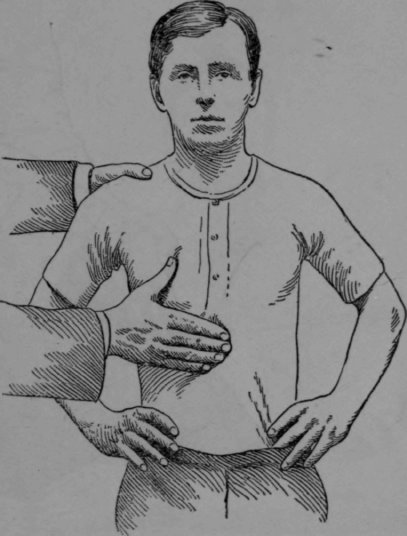
- The resolute center
- I cannot emphasize enough of what my teachers have taught me. The lead comes from the center—That area in and around my solar plexus. Its the spot that directs your partner to go forward, backward, side, go, stop, slow, fast. Without using the center, my dance feels cold and hollow
- Driving legs
- The legs plant, while moving the upper body forward in the direction you want to go
- Micro leads
- Many, many people have said that you can dance a tango without using arms. You just use your chest. Much like life, this rule (IMHO) has it's exceptions. I for one can't do it. As in life I had to make compromises. I call them "Micro leads."
- I use muscular impulses (i.e. Relaxing, tensing, gentle pulses) to help signal my intensions. I tense up my upper body to say... "We're slowing." I suddenly loosen up to say... "We're moving forward." I become stiffer, then relax on the right as I swing my upper body to say... "Ocho."
- Balance of execution
- The hard part of my micro leading is to be smooth and subtle. I need balance. Too much (impulses) will become distracting for my partner. Too little and I may not be able to convey my desires. It becomes an exercise in execution that can only be done via trial and error.
It seems that the more I grow in tango, the more I find things to work on. The only constant I find is mastering the basics. All of the stuff that I just talked about is part of refining the basics to make the dance my own.
15 February 2010
One last dance goodbye
I have a friend whom I miss dearly. Such a long time has passed. Too many things going on.
This evening, I see her in the milonga. Radiant. I dance a tanda with her and it was marvelous. The evening continues and many tandas pass—Neither of us are able to catch up.
The evening draws to a close, and we have said our goodbyes. Dancing shoes turn into street shoes. Coats are donned, as we are all dressed to go our separate ways into the cold, wet Seattle night.
The last song of the tanda comes. One parting look at my friend as the music blares. We dance in the small space in between chairs, tables, and amidst people ready to leave—fully clothed in cold weather street attire.
One beautiful song, one last beautiful tango, one beautiful friend, one last dance goodbye.
This evening, I see her in the milonga. Radiant. I dance a tanda with her and it was marvelous. The evening continues and many tandas pass—Neither of us are able to catch up.
The evening draws to a close, and we have said our goodbyes. Dancing shoes turn into street shoes. Coats are donned, as we are all dressed to go our separate ways into the cold, wet Seattle night.
The last song of the tanda comes. One parting look at my friend as the music blares. We dance in the small space in between chairs, tables, and amidst people ready to leave—fully clothed in cold weather street attire.
One beautiful song, one last beautiful tango, one beautiful friend, one last dance goodbye.
22 January 2010
Dancing the silences and pauses
This is a follow-up to my post, "Navigation... Where it all comes together." In one of the comments, tangocherie had mentioned, "You are totally correct. But don't forget the pauses...dancing the silences. You don't have to keep up perpetual motion. Women love to pause."
This caused me to remember one of the things my teacher taught me...
Mistaken impressions of "Perpetual motion"
When I was in my early tango days, I was under the (mistaken) impression that when you dance, you dance ALL THE TIME. Meaning, you were constantly stepping, stepping, stepping.
In retrospect, I looked like a hamster (the rodent) in a wheel. I kept going, and going, and going and buzzed around the floor. It must have been a "not so pleasant" tango experience for my partner. I apologize. I had no idea that, not only was it not good for my partner, but, it also did NOT look good. My first tango teacher called my attention...
"Stops are steps"
According to my first tango teacher, one should not barrel through the dance. I just did not get this concept. I REALLY thought that dancing meant constantly moving... like Disco.
I "Got it" when he said two things:
An added bonus
Taking a second (or two) to hesitate, stop, and pause allows your partner the perfect opportunity to do adornos (a.k.a. embellishments) without disrupting the rhythm of the dance!
For illustrative purposes, I've included a clip of Jennifer Bratt and Ney Mello dancing to "Poema." Listen to the music, as there are very distinctive pauses and silences in this piece. Observe Ney as he hestates, slows, and stops to the changing rhythm of the music. Observe where and WHEN Jennifer does most of her adornos—During Ney's...
Note that this is a performance. His pauses will be readily apparent. Had this been in milonga, it would be very "Intensely silent."
This caused me to remember one of the things my teacher taught me...
Mistaken impressions of "Perpetual motion"
When I was in my early tango days, I was under the (mistaken) impression that when you dance, you dance ALL THE TIME. Meaning, you were constantly stepping, stepping, stepping.
In retrospect, I looked like a hamster (the rodent) in a wheel. I kept going, and going, and going and buzzed around the floor. It must have been a "not so pleasant" tango experience for my partner. I apologize. I had no idea that, not only was it not good for my partner, but, it also did NOT look good. My first tango teacher called my attention...
"Stops are steps"
According to my first tango teacher, one should not barrel through the dance. I just did not get this concept. I REALLY thought that dancing meant constantly moving... like Disco.
I "Got it" when he said two things:
- "You need to listen to the music. You move when it does, you stop when it does. Accelerate, and slow down to the flow and nuances of the music."
- "Stops are steps." Pauses, hesitations, just not moving if appropriate count as steps
Realizing the significance, I went "Aha!" I've been doing that ever since. Of course, I've refined the technique over time.
Building tension for hesitations, stops, and pauses
First and foremost, I've learned to really listen to tango music. There are distinct silences and pauses interspersed in lots of tango music.
Second, I've learned to build muscular tension smoothly to be in tune with the music. When the music starts to slow, I stiffen myself enough to smoothly interrupt what I was leading a split-second earlier. I do this for hesitations, stops or pauses. This gives my partner clear signals that tell her that we are changing pace. All she has to do is wait, then she knows what to follow. When we do come to a full stop, my tension releases—Like taking your foot off the car's break pedal. Which in turn is the signal for your partner that your about to move again.
Its a very, very subtle thing. Most especially when you dance in close embrace in a packed milonga. However, according to my partners, when I (occasionally) get it right, the lead for these hesitations, stops, and pauses are so clear. I've been told they like it.
An added bonus
Taking a second (or two) to hesitate, stop, and pause allows your partner the perfect opportunity to do adornos (a.k.a. embellishments) without disrupting the rhythm of the dance!
Moving is nice. Dancing the silences and the pauses are just as nice.
- – — – -
For illustrative purposes, I've included a clip of Jennifer Bratt and Ney Mello dancing to "Poema." Listen to the music, as there are very distinctive pauses and silences in this piece. Observe Ney as he hestates, slows, and stops to the changing rhythm of the music. Observe where and WHEN Jennifer does most of her adornos—During Ney's...
Note that this is a performance. His pauses will be readily apparent. Had this been in milonga, it would be very "Intensely silent."
17 January 2010
Seattle tango topographies
I have read (and heard) many say that tango is like a metaphor for life. In this case, tango in Seattle took some twists and turns and evolved into (what I think), is one of the best tango communities in the world.
Beginnings
In the late eighties, tango was introduced to Seattle by Sonny Newman. He was the one who first started teaching Argentine Tango. His classes would start a core group of people who would build, influence, and expand what the Seattle tango community is today. Inspirational, vibrant, elegant, and ever evolving, albeit small.
Growing pains
As in any art form, the initial introduction of this medium produced a cadre who had a common thread—Argentine tango. However, their preferences in tango varied from the intimately close to the full blown show stuff. Like rhizomes emanating from the central root node, they branched out and created nodes of their own. The foundations of Seattle tango had "taken root."
Imagine these tango rhizomes and nodes growing within the same root-barricaded plot. Imagine the network thriving and growing. There would be one inevitable result from this crowding... conflict.
The nuevo following flourished into a large group of dancers who emulated their heroes. They danced beautifully, showy, flashy, large, and with panáche. It was wonderful to watch.
The salon people, thanks to the very influential efforts of a small and dedicated caucus of purist, traditionalist, tango dancers, evolved into Seattle's milonguero crowd. Elegant, meditative, intimate, passionate was their hallmark.
Both of these disciplines deserve commendation as (1) it got people excited, and kept expanding the following; (2) it covered and catered to the Seattle tango demographic which spanned from teens to octogenarians. It made people happy.
Both styles are beautiful. Both have their place in the world. However, as the numbers of both following grew, it forced tango dancers to dance in tighter and tighter spaces. This (just like a congested freeway) caused complications.
Collisions, lane disruptions, stiletto heel impaling and slashing, toe crushing, kicking, etc. became common place. Cliques abounded. Tensions within the milongas were high between the practitioners of the divergent tango styles.
Diversification
It was inevitable for diversification to happen. Having fervent nuevo and milonguero styles dancing in close proximity was complicated. The ever tightening milongas were getting in the way of everyone's fun. Something was bound to happen... and it did.
Dedicated nuevo organizers opened their own venues. These venues were dedicated to, managed by, and frequented by this specific crowed. It provided the appropriate space and consistency needed for this group to flourish, enjoy, and dance this energetic form of tango.
A side benefit was to provide organizers a better feel for the teachers they were importing. It also trained and developed a new crop of instructors more appropriate for this demographic. They got better.
By the nuevo crowd having their own venue, elegant and intimate milonguero dancers now had the unimpeded freedom to move in close-quarters without the fear of contact nor collision. The push now was to improve the milonguero tango standard.
Milonguero specialist teachers were imported. Floor etiquette was stressed. The result was La Garua—One of the best places to dance tango in Seattle (my personal favorite). The organizers of this marvelous milonga (in no small part) are greatly responsible for influencing Seattle's development as (IMHO) one of the best close-embrace tango communities... anywhere.
Harmony
One would think that this schism would result in a permanent rift between the open and close-embrace practitioners. On the contrary. When numbers of each crew congregate (e.g. Dance Underground, Seattle Tangomagic), each has learned to compensate for each other. This allows everyone space, etiquette, and the observance of the line of dance for everyone to enjoy. It's a peculiarly Seattle oddity.
allseattletango.com: A listing of all thing tango in Seattle
Growing pains
As in any art form, the initial introduction of this medium produced a cadre who had a common thread—Argentine tango. However, their preferences in tango varied from the intimately close to the full blown show stuff. Like rhizomes emanating from the central root node, they branched out and created nodes of their own. The foundations of Seattle tango had "taken root."
- The styles
Imagine these tango rhizomes and nodes growing within the same root-barricaded plot. Imagine the network thriving and growing. There would be one inevitable result from this crowding... conflict.
The nuevo following flourished into a large group of dancers who emulated their heroes. They danced beautifully, showy, flashy, large, and with panáche. It was wonderful to watch.
The salon people, thanks to the very influential efforts of a small and dedicated caucus of purist, traditionalist, tango dancers, evolved into Seattle's milonguero crowd. Elegant, meditative, intimate, passionate was their hallmark.
Both of these disciplines deserve commendation as (1) it got people excited, and kept expanding the following; (2) it covered and catered to the Seattle tango demographic which spanned from teens to octogenarians. It made people happy.
- Traffic and congestion
Both styles are beautiful. Both have their place in the world. However, as the numbers of both following grew, it forced tango dancers to dance in tighter and tighter spaces. This (just like a congested freeway) caused complications.
Collisions, lane disruptions, stiletto heel impaling and slashing, toe crushing, kicking, etc. became common place. Cliques abounded. Tensions within the milongas were high between the practitioners of the divergent tango styles.
- Cultivating expertise
Diversification
It was inevitable for diversification to happen. Having fervent nuevo and milonguero styles dancing in close proximity was complicated. The ever tightening milongas were getting in the way of everyone's fun. Something was bound to happen... and it did.
- Emergence of the nuevo (open-embrace) venue
Dedicated nuevo organizers opened their own venues. These venues were dedicated to, managed by, and frequented by this specific crowed. It provided the appropriate space and consistency needed for this group to flourish, enjoy, and dance this energetic form of tango.
A side benefit was to provide organizers a better feel for the teachers they were importing. It also trained and developed a new crop of instructors more appropriate for this demographic. They got better.
- Bolstering the milonguero
By the nuevo crowd having their own venue, elegant and intimate milonguero dancers now had the unimpeded freedom to move in close-quarters without the fear of contact nor collision. The push now was to improve the milonguero tango standard.
Milonguero specialist teachers were imported. Floor etiquette was stressed. The result was La Garua—One of the best places to dance tango in Seattle (my personal favorite). The organizers of this marvelous milonga (in no small part) are greatly responsible for influencing Seattle's development as (IMHO) one of the best close-embrace tango communities... anywhere.
Harmony
One would think that this schism would result in a permanent rift between the open and close-embrace practitioners. On the contrary. When numbers of each crew congregate (e.g. Dance Underground, Seattle Tangomagic), each has learned to compensate for each other. This allows everyone space, etiquette, and the observance of the line of dance for everyone to enjoy. It's a peculiarly Seattle oddity.
allseattletango.com: A listing of all thing tango in Seattle
Subscribe to:
Posts (Atom)